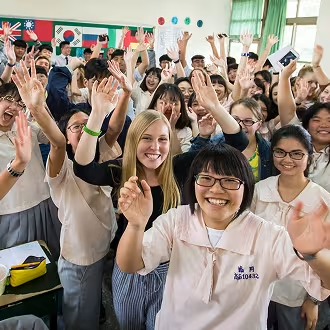
Service Opportunities
There are many mission opportunities available to serve
with the LCMS, ranging from one week to a lifetime.
Learn More

The LCMS Office of International Mission has the exciting and important task of sharing the Good News of Jesus Christ all over the world. The mission of the OIM is to spread the Gospel, plant Lutheran churches and show mercy.
Imagine these three emphases like an arch, where planting Lutheran churches sits as the keystone. The keystone makes the arch possible. But without the stones on either side, the keystone is useless. So also, spreading the Gospel and showing mercy to those in need directly support the planting of Lutheran churches, which of necessity will be the result of the sharing of the pure and unadulterated Means of Grace.
This is the central work done through missionaries who share the love and message of Christ in different countries. The OIM’s recruits, trains, sends and supports these church workers so they are equipped with the right tools and prepared to make disciples of all nations (Matt. 28:19–20).
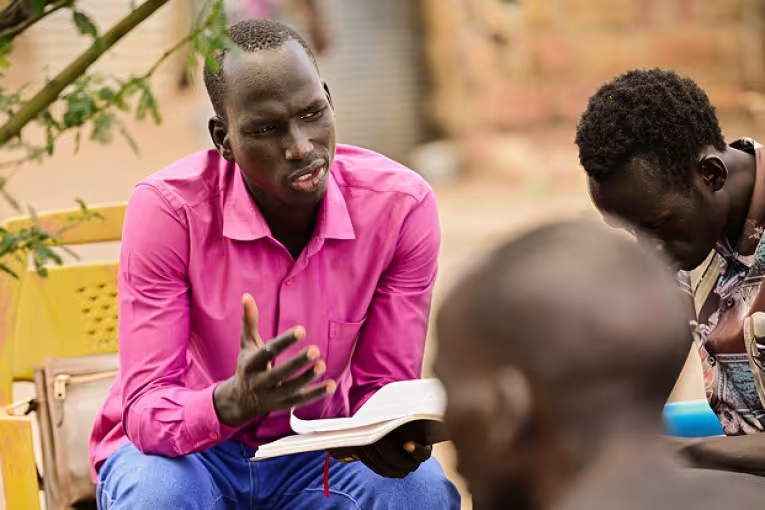
The Good News of Jesus Christ is spreading in Africa. LCMS International Mission in Africa includes work in 27 countries and with 35 church bodies. In a place where Islam and traditional religions are a dominant force, the Gospel still goes forth. Lutheran theological colleges and seminaries are training pastors and deaconesses to be bold servants of Christ and serve in His mission field.
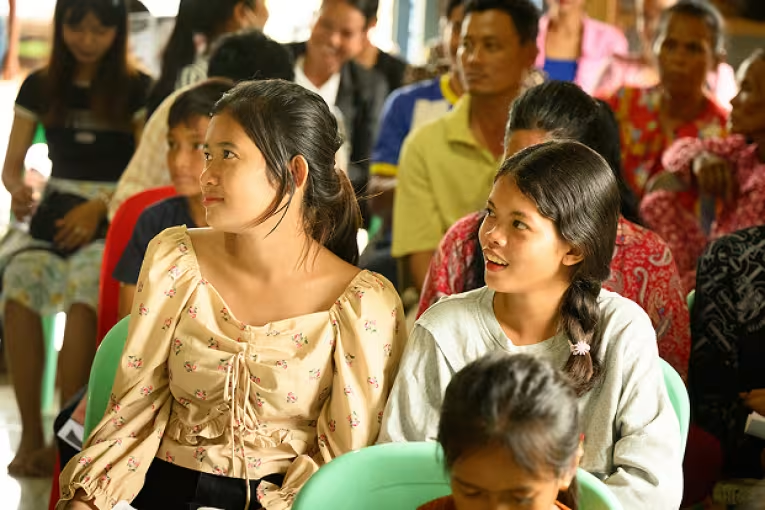
In the late 1800s, the LCMS sent missionaries to India. Today, the India Evangelical Lutheran Church partners with the LCMS along with LCMS sister churches all over the region to share the message of Jesus Christ. All over Asia, the Gospel is spreading, Lutheran churches are being planted and mercy is being shown.
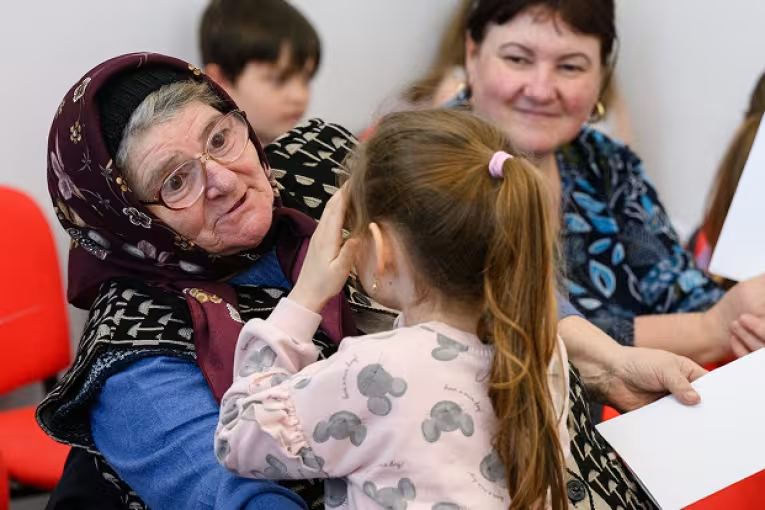
The Eurasia region consists of Europe, Russia, upper Asia and the Middle East. This may historically be the first part of the world where Christianity spread, but much of the message of Jesus Christ is has been long forgotten or rejected. In this mission field, LCMS missionaries work with and through counseling centers, drug and alcohol rehabilitation programs, anti-abortion educational outreach, and Middle Eastern refugee assistance and more.
LCMS missionaries and sister churches in Latin America support 42 church plants, giving faithful witness in 13 countries. We also support seminary training for pastors and deaconesses, ongoing translation and distribution of theological books and articles, and Lutheran education, reaching young people in 155 schools in 10 countries. We celebrate with you all that, through His Word, our dear Lord Jesus extends His church through His mighty Holy Spirit so that we might together make His Name known to those who sit in darkness.

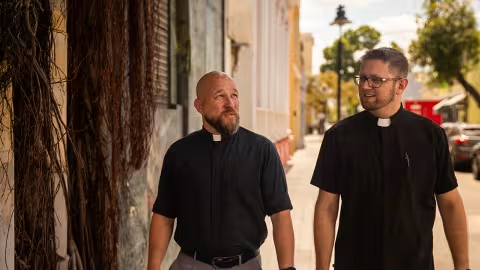
On Saturday, Oct. 24, 10–11 a.m. Central Daylight Time, hear from a panel of current missionaries about how they spread the Gospel, plant Lutheran churches and show mercy around the world.
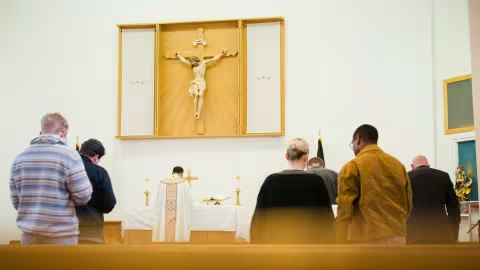
Spangdahlem Evangelical Lutheran Church in Germany is growing — according to God’s perfect plan and timing.
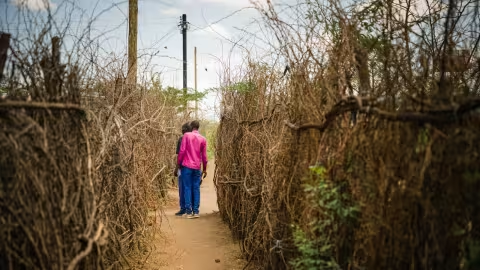
The Holy Spirit is at work in refugee camps and other towns in northwest Kenya, bringing saving faith in Christ the Redeemer to all people.
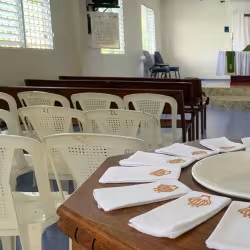
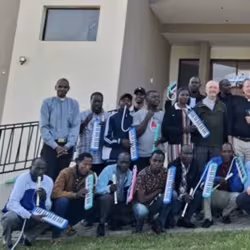
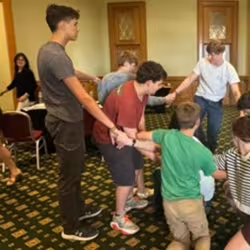
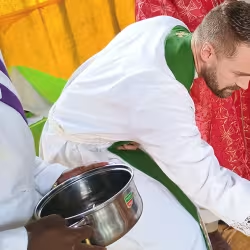
A FORO is an opportunity to plug into mission to extend the kingdom of God in an international context. It allows participants the opportunity to support a particular mission with prayer, short-term teams, vocational skills and funding.
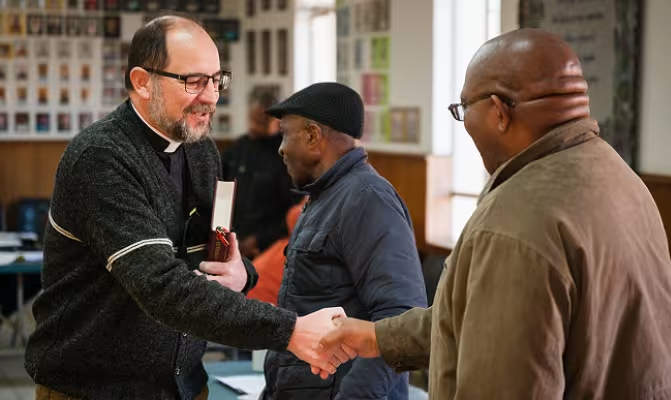
The Lutheran Church—Missouri Synod has always had a strong focus on education. As the mission field expanded beyond the United States, the LCMS opened schools throughout Asia. There are nearly 200 Lutheran schools in Asia, and the LCMS operates two international schools.
The Lutheran Church—Missouri Synod’s two international schools — Concordia International School Shanghai and Concordia International School Hanoi — are independently operated schools. While they maintain relationships with one another and share membership (along with scores of other Lutheran schools in Asia and Australia) in the Asia Lutheran Education Association, these collegial links are mainly for the purpose of learning from one another and fostering communications among the schools and their respective administrators and educators. The Synod’s international schools are neither associated with nor legally related to the so-called Concordia Federation of Schools in Asia, any church body and its schools, or any other school in Asia using the name “Concordia.”